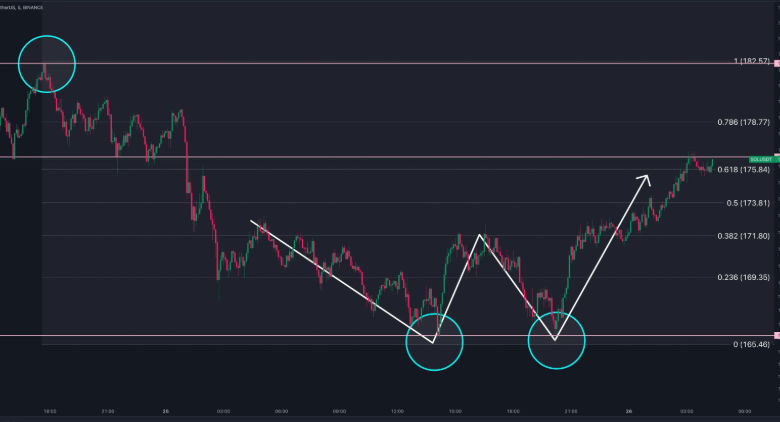
Introduction to the Solana Chart Tutorial
For crypto investors, learning how to analyze price charts is a valuable skill. The solana chart provides clear insights into market behavior, helping investors understand trends, momentum, and potential opportunities.
This step-by-step tutorial is designed for beginners and intermediate users who want to confidently analyze SOL price movements using practical methods.
Step 1: Choosing the Right Solana Chart Platform
Before analysis begins, selecting a reliable charting platform is essential.


Recommended Platforms
- TradingView
- CoinMarketCap
- CoinGecko
TradingView is preferred due to its advanced tools and customization options.
Step 2: Understanding Solana Chart Layout
Every Solana chart includes key elements:
- Price axis (vertical)
- Time axis (horizontal)
- Candlesticks or bars
- Volume indicator
Familiarity with the layout ensures accurate interpretation.
Step 3: Selecting the Best Timeframe
Timeframes define how much price data each candle represents.
Common Timeframes
- Daily: Long-term trend analysis
- 4-hour: Swing trading
- 1-hour: Short-term trading
Long-term investors benefit most from higher timeframes.
Step 4: Identifying Trends on the Solana Chart
Trend identification simplifies decision-making.
Trend Types
- Uptrend
- Downtrend
- Sideways movement
Trading in the direction of the trend improves consistency.
Step 5: Drawing Support and Resistance Levels
Support and resistance are key price zones.
How to Draw Them
- Mark previous highs and lows
- Identify areas of repeated price reaction
These levels help anticipate price behavior.
Step 6: Using Indicators on the Solana Chart
Indicators add confirmation to analysis.
Essential Indicators
- Moving Averages
- RSI
- MACD
Avoid using too many indicators at once to prevent confusion.
Step 7: Analyzing Volume
Volume reveals the strength of price moves.
- High volume confirms breakouts
- Low volume signals weak momentum
Volume is critical for validating trends.
Step 8: Combining Analysis for Smarter Decisions
Effective analysis combines:
- Trend direction
- Support and resistance
- Indicators
- Volume
This multi-layer approach increases reliability.
Step 9: Risk Management for Solana Investors
Risk management protects capital.
Best Practices
- Set stop-loss levels
- Avoid emotional trading
- Manage position size
Successful investors focus on long-term consistency.
Step 10: Practicing With the Solana Chart
Practice improves skill.
- Use demo accounts
- Review past price movements
- Analyze mistakes
Platforms like TradingView offer free charting tools for practice.
FAQs About the Solana Chart Tutorial
1. Is this tutorial suitable for beginners?
Yes, it’s designed for step-by-step learning.
2. How long does it take to learn chart analysis?
Basic skills can be learned in weeks with regular practice.
3. Do I need indicators to analyze the Solana chart?
Indicators help but are not mandatory.
4. What timeframe is best for investors?
Daily and weekly timeframes work best.
5. Can this method be used for other cryptocurrencies?
Yes, the same principles apply across markets.
6. Where can I practice Solana chart analysis?
TradingView offers free charting tools.
Conclusion: Master the Solana Chart Step by Step
The solana chart is a powerful tool that helps investors understand price behavior and market trends. By following this step-by-step tutorial, investors can build confidence, improve decision-making, and reduce unnecessary risks.
With patience and consistent practice, chart analysis becomes an invaluable investment skill.